

-
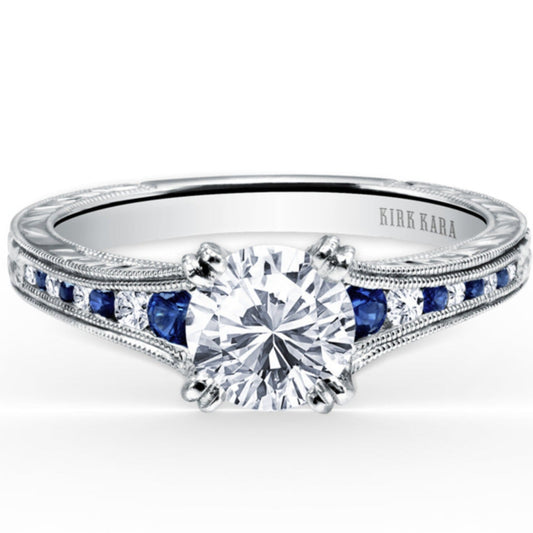
Kirk Kara "Stella" Blue Sapphire Channel Set Diamond Engagement Ring
Regular price From $4,480.00 USDRegular priceUnit price per -
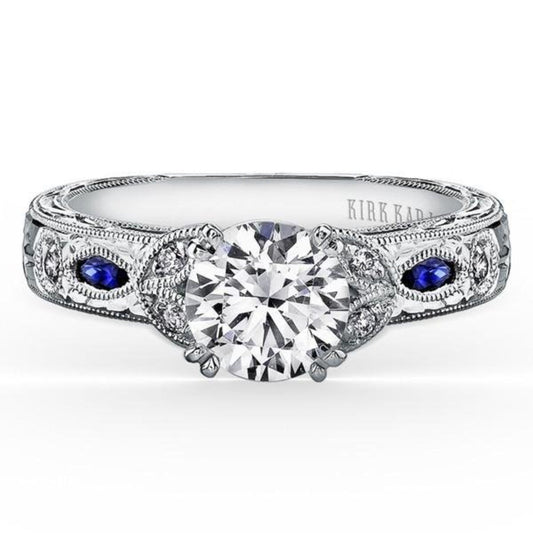
Kirk Kara "Dahlia" Marquise Shaped Blue Sapphire Diamond Engagement Ring
Regular price From $1,675.00 USDRegular priceUnit price per$5,770.00 USDSale price From $1,675.00 USDSale -
Gabriel & Co. "Lexington" Diamond & Blue Sapphire Halo Engagement Ring
Regular price From $2,625.00 USDRegular priceUnit price per -
Gabriel & Co "Carrie" Blue Sapphire Pear Cut Side Engagement Ring
Regular price From $2,875.00 USDRegular priceUnit price per -
Gabriel & Co. "Carrie" Blue Sapphire Pear Cut Side Engagement Ring
Regular price From $2,875.00 USDRegular priceUnit price per -
Gabriel & Co. "Carrie" Blue Sapphire Pear Cut Side Engagement Ring
Regular price From $2,950.00 USDRegular priceUnit price per -
Ben Garelick Luna Twist Hidden Halo Blue Sapphire Engagement Ring
Regular price From $2,800.00 USDRegular priceUnit price per -
Gabriel & Co. "Chrystie" Diamond & Blue Sapphire Halo Engagement Ring
Regular price From $3,200.00 USDRegular priceUnit price per -
Gabriel & Co. Vintage Style Blue Sapphire & Diamond Engagement Ring
Regular price From $2,600.00 USDRegular priceUnit price per -
Kirk Kara "Charlotte" Blue Sapphire Diamond Three Stone Engagement Ring
Regular price From $7,160.00 USDRegular priceUnit price per -
Kirk Kara "Dahlia" Marquise Cut Blue Sapphire Engagement Ring
Regular price From $5,330.00 USDRegular priceUnit price per -
Kirk Kara "Angelique" Scroll Work Blue Sapphire Engagement Ring
Regular price From $5,990.00 USDRegular priceUnit price per -
Kirk Kara "Carmella" Blue Sapphire Bezel Set Diamond Engagement Ring
Regular price From $5,930.00 USDRegular priceUnit price per -
Barkev's Three Stone Blue Sapphire Diamond Engagement Set
Regular price From $4,160.00 USDRegular priceUnit price per -
Barkev's Blue Sapphire "Halo Swirl" Diamond Engagement Ring
Regular price From $3,970.00 USDRegular priceUnit price per -
Barkev's Blue Sapphire Prong Set "Flare" Diamond Engagement Ring
Regular price From $3,330.00 USDRegular priceUnit price per -
Barkev's Blue Sapphire Diamond Encrusted Petal Engagement Ring
Regular price From $3,780.00 USDRegular priceUnit price per -
Barkev's Three Stone Blue Sapphire Diamond Engagement Ring
Regular price From $2,420.00 USDRegular priceUnit price per -
Kirk Kara "Charlotte" Blue Sapphire Baguette and Diamond Engagement Ring
Regular price From $6,490.00 USDRegular priceUnit price per -
Kirk Kara "Charlotte" Three Stone Blue Sapphire Diamond Engagement Ring
Regular price From $7,020.00 USDRegular priceUnit price per


Buy now, pay later.
Frequently Asked Questions
Why are blue sapphire engagement rings becoming so popular for modern brides?
Sapphire is the original alternative to a diamond and the most practical one. It offers real color, durability that stands up to daily wear at 9 on the Mohs scale, and a price per carat well below a diamond of comparable size. The royal association does not hurt, since the most famous engagement ring of the last fifty years is a blue sapphire. It also has a long history as an engagement stone, predating the diamond's dominance entirely, so choosing sapphire is arguably more traditional rather than less. Blue sapphire with diamond accents is the combination we build most often.
What do blue sapphire engagement rings symbolize in a marriage?
Loyalty and faithfulness, above all, and this is one of the few stone meanings with genuine historical depth rather than modern invention. Sapphires have been associated with truth, sincerity, and constancy across many cultures for centuries, which is why they were a favored engagement stone long before diamonds took over. Blue itself carries associations with calm, depth, and steadiness. For couples who want a ring that means something specific and defensible, sapphire has a stronger claim than most stones. It also happens to be the traditional gift for a forty-fifth wedding anniversary, which is a nice thought at the beginning.
Are blue sapphire engagement rings cheaper than diamond rings?
Usually yes, and often substantially, though sapphire pricing varies enormously with color quality. A fine, vivid, well saturated blue can command serious money, while a good commercial quality sapphire costs a fraction of a diamond of the same size. The settings in this collection mostly run between about $2,840 and $5,310, with the middle near $4,070. Because sapphire is priced by color rather than by a standardized grading scale, the range is wide, and the only sensible approach is to look at stones in person. We are happy to pull several at different price points and let you compare
Is a blue sapphire ring durable enough for everyday wear?
Yes, and sapphire is the best choice among colored stones for daily wear by a clear margin. At 9 on the Mohs scale, it sits just below diamond and moissanite, harder than anything you will casually knock it against. It is also tough rather than brittle, so it handles impact well. This is exactly why sapphire, along with ruby, which is the same mineral, is the colored stone we recommend without hesitation for an engagement ring. Softer stones like emerald and opal are a different conversation. Get the prongs checked annually, and a sapphire ring will outlast almost anything.
How do you pick the right carat size for a blue sapphire ring?
One thing to know first: sapphire is denser than diamond, so a sapphire of the same carat weight looks slightly smaller than a diamond would. Shop by millimeter dimensions rather than carat weight to avoid the surprise. Beyond that, larger sapphires can get darker, because more depth means more color saturation, so a big stone can read almost navy or black in dim light. That is the trade-off nobody mentions. A medium size sapphire in a vivid blue often looks better on the hand than a large dark one. Come see a few sizes in mixed lighting, which is where this decision gets made.
What is the safest way to clean a blue sapphire ring at home?
Sapphire is hard and chemically stable, so it is easy to care for. Soak the ring twenty minutes in warm water with a few drops of mild dish soap, brush the underside with a soft toothbrush, rinse with the drain closed, and dry with a lint free cloth. Cleaning underneath matters, especially with sapphire, because a colored stone goes dull and muddy looking much faster than a diamond when film builds up beneath it. Avoid bleach, chlorine, and acetone, which attack the metal. If the sapphire has been treated or has significant surface reaching inclusions, tell us and we will avoid the ultrasonic when it comes in.
Can I customize a blue sapphire setting with diamond accents?
Yes, and it is the most requested version by a wide margin. Diamond accents around a sapphire do real work, because the white sparkle contrasts against the blue and makes the color read more vividly. A diamond halo is the classic treatment and the reason the royal ring looks the way it does. Diamond pave shoulders, tapered baguette sides, or a three-stone with diamond sides all work. Metal choice shifts the effect: white gold and platinum make the blue cooler and crisper, while yellow gold warms it considerably. Most settings are made to order, so bring the look to our jewelers.
How do I choose the best shade of color for a blue sapphire?
Color is essentially the whole value of a sapphire, and there is no standardized grade for it, so your eye is the instrument. What you are judging is saturation, how intense the blue is, and tone, how light or dark. The most prized stones are a vivid medium blue, sometimes described as royal or cornflower, bright enough to hold color in dim light without going black. Too light reads washed out. Too dark reads inky and loses life indoors. Look at candidates in daylight and in indoor light, because sapphires can change character completely between the two. Come in and we will lay several out for you.