

-
Barkev's Round Cut Morganite Halo Diamond Engagement Ring
Regular price From $5,160.00 USDRegular priceUnit price per -
Barkev's Cushion Cut Morganite Halo Diamond Engagement Ring
Regular price From $6,870.00 USDRegular priceUnit price per -
Kirk Kara "Charlotte" Emerald Cut Amethyst & Green Tsavorite Diamond Engagement Ring
Regular price From $8,760.00 USDRegular priceUnit price per -
Kirk Kara "Stella" Purple Amethyst Diamond Engagement Ring
Regular price From $4,480.00 USDRegular priceUnit price per -
Gabriel & Co. "Girasol" Blue Sapphire Diamond Engagement Ring
Regular price From $2,050.00 USDRegular priceUnit price per -
Kirk Kara "Charlotte" Channel Set Amethyst & Diamond Engagement Ring
Regular price From $4,890.00 USDRegular priceUnit price per -
Kirk Kara "Charlotte" Baguette Cut Purple Amethyst Diamond Engagement Ring
Regular price From $6,490.00 USDRegular priceUnit price per -
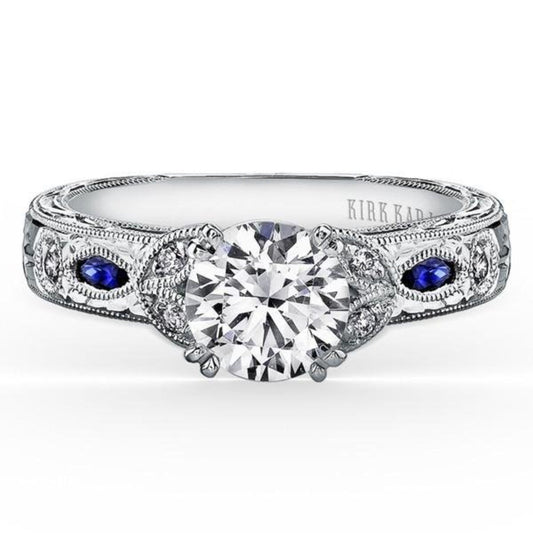
Kirk Kara "Dahlia" Marquise Shaped Blue Sapphire Diamond Engagement Ring
Regular price From $1,675.00 USDRegular priceUnit price per$5,770.00 USDSale price From $1,675.00 USDSale -
Kirk Kara "Charlotte" Blue Sapphire Baguette and Diamond Engagement Ring
Regular price From $6,490.00 USDRegular priceUnit price per -
Barkev's Pink Sapphire "Halo Swirl" Diamond Engagement Ring
Regular price From $3,970.00 USDRegular priceUnit price per -
Barkev's Three Stone Blue Sapphire Diamond Engagement Set
Regular price From $4,160.00 USDRegular priceUnit price per -
Kirk Kara "Dahlia" Marquise-Cut Vintage Amethyst Diamond Engagement Ring
Regular price From $5,770.00 USDRegular priceUnit price per -
Kirk Kara "Stella" Pink Sapphire and Diamond Engagement Ring
Regular price From $4,480.00 USDRegular priceUnit price per -
Kirk Kara "Dahlia" Marquise Cut Blue Sapphire Engagement Ring
Regular price From $5,330.00 USDRegular priceUnit price per




Buy now, pay later.
Frequently Asked Questions
Why are gemstone engagement rings becoming so popular for modern proposals?
Color is the draw. More couples want a ring that clearly is not the same one everyone else is wearing, and a sapphire, ruby, emerald, or morganite center does that instantly. It is also a straightforward way to work in a favorite color, a birthstone, or a family tradition without abandoning the classic engagement ring shape. Worth remembering that colored stones were the norm for engagement rings long before diamonds took over in the twentieth century, so this is a return rather than a departure. Our gemstone settings mostly run between about $2,920 and $5,310, with the middle near $4,480.
What do gemstone engagement rings symbolize in a relationship?
It depends entirely on the stone, and some of these meanings have real historical depth rather than being invented for marketing. Sapphire has stood for loyalty and faithfulness for centuries. Ruby carries passion and courage. Emerald is associated with renewal and growth. Morganite, being a modern favorite, has picked up an association with compassion. That said, most couples we work with choose their stone because it is simply their color, or it belonged to a grandmother, or it means something private between them. That is the real advantage here: you get to write the meaning rather than inherit it.
Are gemstone engagement rings cheaper than diamond rings?
Often, though it varies enormously by stone. Sapphire, ruby, morganite, and amethyst generally cost far less per carat than a diamond of comparable size. Fine emerald and top-quality Kashmir or Burmese material can cost more than diamond. Unlike diamonds, colored stones have no universal grading scale, so price is driven by color quality judged by eye, which makes the range extremely wide. Our settings in this collection mostly run between about $2,920 and $5,310. For the center stone, the only sensible approach is to look at several in person, and we are happy to pull a range of price points.
Is a gemstone engagement ring durable enough for everyday wear?
This is the question that matters most, and the honest answer is that it depends entirely on the stone. Sapphire and ruby, which are the same mineral, sit at 9 on the Mohs hardness scale and are excellent for daily wear. Morganite and emerald sit around 7.5 to 8, and emerald in particular is heavily included and can fracture, so it wants a protective setting and careful handling. Amethyst at 7 will show scratches over years. Opal and pearl are far too soft for an engagement ring. Tell us your lifestyle and we will steer you toward a stone that survives it.
How do you pick the right size for a gemstone ring setting?
Two things trip people up. First, colored stones have different densities than diamond, so a one carat sapphire looks smaller than a one carat diamond while a one carat emerald looks larger. Always compare millimeter dimensions rather than carat weight. Second, larger stones read darker, because more depth means more color saturation, so a big sapphire can go almost navy indoors while a medium one stays vivid. That surprises people. The stone that photographs best is often not the largest one. Come look at a few sizes in both daylight and indoor light, which is where this decision actually gets made.
What is the safest way to clean gemstone jewelry at home?
Warm water, a few drops of mild dish soap, twenty minutes of soaking, and a soft toothbrush on the underside where lotion and soap collect. Cleaning underneath matters more with colored stones than with diamonds, since a film beneath a colored stone makes it look muddy and dead very quickly. The important caution is that not every gemstone tolerates this. Emerald, opal, pearl, and any oiled or fracture filled stone should never go near an ultrasonic cleaner or hot water, and emeralds in particular can lose their oil treatment. Tell us what your center stone is, and we will give you care instructions specific to it.
Can I customize a gemstone ring layout with different accent pieces?
Yes, and diamond accents do real work around a colored stone, because white sparkle contrasts against color and makes it read more vividly. A diamond halo is the classic treatment. Diamond pave shoulders, tapered baguette sides, or a three-stone with diamond sides all work well. Metal choice shifts the color noticeably: white gold and platinum keep a blue or green stone cool and crisp, while yellow gold warms everything and suits ruby, morganite, and citrine beautifully. Most of these settings are made to order, so bring us the stone or the idea, and our jewelers will build around it.
How do I check for quality and inclusions in a colored center stone?
Colored stones are judged differently from diamonds, and color comes first. You are looking at saturation, how intense it is, and tone, how light or dark, and the best stones hold their color in dim light rather than going black. Clarity standards are looser than for diamonds and vary by species, since emeralds are expected to have inclusions while sapphires are held to a higher bar. What matters is whether inclusions are visible to the naked eye and whether any of them reach the surface, since those can weaken the stone. Look in daylight and indoor light, and we will show you what to look for under a jeweler’s loupe.