

When you’re looking to purchase your first piece of gold jewelry, you may feel overwhelmed by the amount of choices you have.
Specifically when you hear the term karat!
Surely, karat is a term reserved for diamonds not gold?
That’s where you’d be wrong…carats are how we measure the weight of a diamond, but karats or the karatage is a measurement in which we measure gold.
But what does that even mean?
Don’t worry, we’ve put together a whole blog to clear up any confusion surrounding 10k or 14k gold, so you can be confident when treating yourself to your first piece of gold jewelry or topping up your collection.
Let’s get right into it!
In this article...
- What defines gold karatage?
- The main differences between 10k and 14k gold
- Color differences
- Durability differences
- Price differences
- Skin sensitivity differences
- The pros of 10k gold
- The pros of 14k gold
- The cons of 10k gold
- The cons of 14k gold
- When might 10k gold be better?
- When might 14k gold be better?
- Commonly asked questions
What Defines Gold Karatage?
So, we’ve mentioned the term “karatage” but what does that even mean?
Well, gold karatage refers to the percentage of gold present in an item of jewelry or piece of gold. There are four variants of gold karatage; 10k, 14k, 18k, and 24k.
10k gold has roughly 41.7% of pure gold; this means it is the lowest in percentage, but this lower percentage of gold does make it more durable and less prone to bending, which is a definite perk.

14k has around 58.3% gold and is the most popular choice in the U.S!
With 18k gold, you’re heading towards the higher end of the gold percentage spectrum with approximately 75% pure gold.
18k is the perfect balance between purity and strength, making it a prime choice for fine jewelers.
24k gold is as pure as you can get, ranking in first place with 100% pure gold. It is the purest gold on the market, but sadly, it is far too soft for making jewelry.
But we want to know about 10k and 14k specifically; in this blog, we’re going to break down the pros and cons of each and why you might want to opt for a different karat depending on the type of jewelry you are choosing.
We also have a full dedicated blog to all of the gold karats and what they mean if you'd like to learn more!
"A simple way we explain this in-store is to compare two rings of the same style and weight. If a wedding band weighs 9 grams, a 10k version contains about 3.75 grams of pure gold, while a 14k version contains about 5.25 grams of pure gold. That means the 14k band has roughly 1.49 grams more pure gold before labor, design, diamonds, and finishing are added to the price. This is why two rings can look nearly identical in the case but still carry different price tags. The metal content is only one part of the cost, but it is the first difference we point out when someone is deciding between 10k and 14k gold."
— Peter Manka Jr., Owner at Ben Garelick
The Main Differences Between 10k and 14k Gold
While 10k and 14k gold are both still “gold”, there are of course, some differences between the two.
Color
With 14k gold having a slightly higher percentage of pure gold than 10k gold, it has a richer yellow appearance.
This is due to the higher presence of the gold pigments; while the 10k is still yellow, it is far lighter in appearance overall.
That being said, white gold won’t have much difference in color when compared.
"When showing yellow gold jewelry side by side, we like to place a 10k piece and a 14k piece under both showroom lighting and natural window light. When demonstrating the difference to customers, we typically use plain wedding bands or high-polish bracelets because they make the color contrast easier to see. We have found that pieces with diamonds can distract from the appearance of the gold itself. In these comparisons, 14k yellow gold tends to appear warmer and richer in the solid metal areas, while 10k yellow gold often looks slightly paler. Once diamonds, engraving, or a brushed finish are added, the color difference becomes less noticeable from a normal viewing distance. This is why we recommend comparing actual jewelry styles when deciding between 10k and 14k gold."
— Peter Manka Jr., Owner at Ben Garelick
Durability
As you may have guessed from our previous comment about 24k gold, the higher in karat you go, the softer the metal becomes.
This is where 10k gold takes the lead, as its lower percentage means it is the most durable of all the gold karats. 14k gold, however, is still considered to be a very durable blend while also maintaining a higher quality gold appearance.
"The durability difference usually shows up most clearly in rings that are worn every day. In our repair intake notes from last year, the 14k pieces we saw most often for reshaping were thinner bands, prongs, and rings worn during hands-on work. The 10k pieces were not damage-proof, but they were less likely to arrive with the same degree of bending when the band width and style were similar. The takeaway is not that 14k is fragile. It is still a strong jewelry metal. The real deciding factor is lifestyle. Someone who removes their ring during work may do beautifully with 14k, while someone who rarely takes jewelry off may appreciate the extra toughness of 10k."
— Peter Manka Jr., Owner at Ben Garelick
Price
Regardless of what karat you choose, gold comes at a relatively higher price point.
This price point continues to climb the purer gold, meaning that 14k gold will have a higher price tag than 10k gold.
10k gold has become increasingly popular because of its affordability!
Skin Sensitivity
As a rule, the purer the gold percentage, the less likely you are to experience any skin sensitivity. 14k gold has a higher percentage of pure gold.
Therefore, it should not cause any rashes on the skin. 10k gold, however, is usually mixed with nickel which can cause skin irritation depending on the wearer.
We will mention, however, that 14k does still use nickel and other alloys, therefore, while you’re less likely to have any skin issues, you should still be cautious if you have any allergies or sensitivities.

If you are known to have sensitive skin, it is always recommended to go for the higher karat of gold where possible, and if you experience any discomfort or rashes wearing your jewelry, you should consult a doctor.
"When customers ask about sensitive skin, we explain that the answer is not always as simple as choosing 10k or 14k gold. The alloy mixture used to create the jewelry can vary significantly from one manufacturer to another. For example, some white gold alloys contain nickel, which can cause irritation for people with nickel sensitivities. This is why we encourage customers to look beyond the gold karat and ask about the specific metals used in the alloy. One designer we carry, Simon G., uses palladium in their white gold alloys rather than nickel. Palladium is naturally hypoallergenic, making it an excellent option for customers with sensitive skin. In many cases, the alloy recipe used by the manufacturer can have a greater impact on comfort than the difference between 10k and 14k gold alone."
— Peter Manka Jr., Owner at Ben Garelick
What Are The Benefits Of 10k Gold?
Like all things, choosing a different karat of gold has its pros and cons.
When it comes to 10k gold, the main benefit really lies in its price point.
Because of its lower percentage of pure gold, 10k gold jewelry is very affordable and easily accessible regardless of what kind of jewelry you’re looking for.
The other major benefit of 10k gold is its durability.
This makes it a great choice for rings, and it has even become a popular choice for wedding bands.
Anything that will be worn every day and meets other surfaces or is likely to rub against another metal will last a long time if made from 10k gold.
What Are The Benefits Of 14k Gold?
This goes for 14k as well; it comes packed with strength, though slightly less than its 10k counterpart. It does, however, have a higher purity percentage to even it out.
Because of this purity, it is also incredibly bright in appearance, which will make any ring, necklace, or bracelet gleam for years to come.
And while 14k gold may not be quite as strong as 10k gold, it is still far stronger than the higher karats, showing it doesn’t always pay to go purer!
Featured Gold Diamond Engagement Rings For Women


The Cons Of 10k Gold
And while 10k gold is massively affordable to a wide market, it is the lowest grade of gold accepted in the U.S market and is considered the least pure.
You will not find gold jewelry less than 10k.
Unlike 14k gold, 10k gold is quite dull in color appearance because of its low percentage of gold.
In order to make up the full composition of the piece of 10k gold jewelry, the piece usually has nickel alloys mixed in.
Unfortunately, nickel is known to cause skin allergies, so 10k gold may not be the best choice for your gold jewelry if you are prone to skin reactions.
The Cons Of 14k Gold
Gold is expensive, no matter what karat it comes in. 10k gold is the most affordable but still comes with a sizable price tag, meaning 14k gold has a significantly higher price to it.
Although overall, purchasing 14k gold over 10k gold will get you more value for money depending on how far your budget can stretch.

While 14k gold is much brighter in appearance than 10k gold, if you were to hold it side by side with 18k or 24k gold you may think that the 14k gold piece of jewelry looks much duller than the higher karats.
Therefore, we always recommend sticking to the same karat of metal throughout your jewelry so as to not make any other pieces appear dull or much brighter than the rest.
However, if your preference is white gold, the difference in color is not as noticeable between 10k or 14k so you’ll be fine to mix your metal karats with this particular color.
And while 14k gold has a fair amount of strength and durability to it, it is not the best bet if you are looking for something super durable.
This is down to the higher purity, making it softer overall.
When Might 10k Gold Be Better?
Because 10k gold is lower in price point, it makes it perfect for the first piece of gold jewelry you may own, whether this is a ring, earrings, necklace, anklet, or bracelet.
It’s far more affordable and accessible.
If you are looking for a ring but use your hands a lot for work or are likely to cause damage to it, going for 10k gold is a great option because of its durability.
"A good example was Jacob, who came in in February looking for a wedding band that could handle daily wear at a hands-on job. The first choice was 14k yellow gold because of the warmer color, but after trying on bands in the same width, Jacob chose 10k for the added durability and lower price. The final band was a 7MM High-Polished yellow gold wedding band priced at $1050. After a year of wear, the main maintenance note was surface scratching, not bending or structural damage. That is exactly the type of situation where 10k gold can make sense."
— Peter Manka Jr., Owner at Ben Garelick
Product Recommendations
At Ben Garelick we have some stunning 10k gold pieces, our Yellow Gold Brushed Center Wedding Band, Two Stone Lourdes Diamond Swirl Pendant, and Heart Shaped Diamond Promise Ring are incredible 10k gold options.
When Might 14k Gold Be Better?
14k gold is the most popular gold used in wedding bands and engagement rings across the U.S!
This is because of its perfect combination of pure gold and strength, making it durable while still having a beautiful shine to it.
Anyone looking for a brighter and more yellow-colored piece of jewelry should opt for 14k gold – whether that be for a ring, necklace, anklet, bracelet, or pair of earrings.
"We often see 14k win when the ring is chosen for color first. We photographed a Ben Garelick Astra engagement ring in 10k yellow gold as well as 14k yellow gold for an online customer. In the side-by-side images, the 14k version gave the center stone a warmer frame and looked closer to the customer’s existing yellow gold jewelry. The 10k version was still attractive, but it read lighter against the same diamond shape and setting style. The customer chose 14k because the ring would be worn next to an inherited 14k family band. For anyone matching heirloom jewelry, that side-by-side check is worth doing before ordering."
— Peter Manka Jr., Owner at Ben Garelick
Product Recommendations
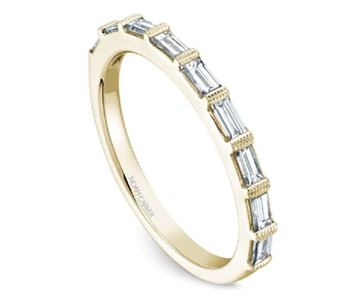
If you’re looking for 14k gold pieces, why not take a look at the Noam Carver Compass Set Princess Cut Diamond Cluster Engagement Ring, our Gabriel Pave Diamond Bar Drop Leverback Earrings and the Noam Carver Baguette Cut Diamond Wedding Ring?

All of which are stunning examples of the beauty of 14k gold!
Commonly Asked Questions
Is 10k/14k Gold Good Enough For A Significant Life Event?
When it comes to your significant life event, the only opinions that matter are yours.
10k and 14k gold have both become favorites amongst newlyweds, couples, and people looking to exchange gifts, mainly because of their slightly lower price point and durability.
If you’re looking for something with more wow factor, then 14k gold is perhaps the best bet.
However, gold is still gold, and if you’re looking to stick within a certain budget, any karat of gold will still be a wonderful choice!
Is 10k/14k Gold A Good Investment?
Gold, no matter what its purity, is a good investment for different reasons.
If you’re looking for something long-lasting, then you’d consider 10k gold to be a great investment because its high durability factor will likely last you a lifetime.
If you’re going for 14k gold, you’ll find that the higher purity of the gold may also bring you a return on your investment should you wish to sell it later down the line.
Although this is all dependent on the price fluctuation of gold, considering gold has been one of the highest commodities since civilization began.
Many people choose to buy gold jewelry as an investment, though we don’t recommend it.
Are Some Pieces Of Jewelry Better In 10k/14k Gold Than Others?
As we’ve exemplified throughout this blog, this really depends on what you are looking for.
Jewelry will benefit more from a lower karat if you are in need of something with high durability; however, if appearance is your main priority, you should opt for a higher karat.
There are no particular pieces that are better, but items like rings are likely to experience more wear therefore, a higher karat may be best suited overall.
The Takeaways
So now you know why gold is defined by different karats and why 10k and 14k gold are both significant players when it comes to gold jewelry.
If you’re looking for your very first piece of gold jewelry or looking to add to an existing collection, 10k and 14k gold has so much to offer, and there is something for almost anyone.
To really appreciate the difference between the two, why don’t you come to the Ben Garelick showroom, where our gold experts can show you all the different items we have to offer in both karats?
And if you can’t make it to the store, you can still speak with one of our gold experts online and choose to try on certain items from the comfort of your home.
There’s a reason gold is the most popular metal for jewelry, and it’s time for you to take home a piece of gold of your very own!


